

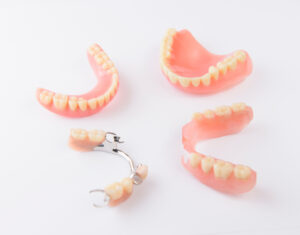
If you’ve been living without some or all of your teeth for several years, you might wonder whether you’ve waited too long to do anything about it. Maybe you’ve heard that your jawbone shrinks after tooth loss and worry that there’s nothing left to support dentures. The good news is that, in most cases, it’s still possible to restore your smile, even after years without teeth. Here’s what you should know.
Why the Jawbone Shrinks After Tooth Loss
Your jawbone stays strong thanks to the stimulation it receives from your tooth roots every time you bite and chew. When teeth are lost, that stimulation disappears, and the body gradually begins to reabsorb the bone that once held them in place. This process, called bone resorption, is a classic case of “use it or lose it.”
Over time, the ridge of bone beneath your gums can become shorter and narrower. This can change the shape of your face, making your cheeks and lips appear sunken, and it can make it more challenging to keep a traditional denture securely in place.
Can You Still Get Dentures?
Yes! Jawbone loss doesn’t automatically rule out dentures. Traditional full dentures rest on your gums and are held in place mainly by suction, so many patients with mild to moderate bone loss can still wear them comfortably. Your dentist will take precise impressions of your mouth and design a custom denture that fits the unique shape of your gums and jaw.
For patients with more significant bone loss, a soft liner can add a layer of cushioning between the denture and your gums for a snugger, more comfortable fit. Because your jaw will continue to change over time, regular checkups and occasional relines will help keep your denture secure.
Implant Dentures: A Stable, Bone-Saving Option
If you want a more secure fit, implant dentures may be worth considering. Instead of relying on suction alone, they attach to small posts placed in the jawbone. These posts act like artificial tooth roots, providing the stimulation your jaw needs to help prevent further bone loss. Many patients also find they can eat a wider variety of foods and speak more confidently without worrying about slipping.
What If You Don’t Have Enough Bone?
Implants need a certain amount of healthy bone to anchor securely. If your jaw has thinned too much, a bone graft may help. During this procedure, bone material is added to the weakened area, where it encourages your body to rebuild healthy bone. Once the graft has healed, which typically takes several months, implants can be placed to support your new denture.
The best way to know which option is right for you is to visit your dentist for an evaluation. Whether it’s been two years or twenty, a confident, complete smile may be closer than you think.
About the Practice
Hanover Road Dental Health in Lebanon, New Hampshire, is home to Dr. Maura H. Sanders, Dr. John N. Munsey, and Dr. Olivia Gajewski. Together, they bring training from Case Western Reserve, Tufts, and the University of New England, along with general practice residencies and ongoing continuing education. The team offers partial, full, and implant dentures to help patients of every age eat, speak, and smile with confidence. To learn more about your options, call (603) 643-4362 or click here to schedule a consultation.